
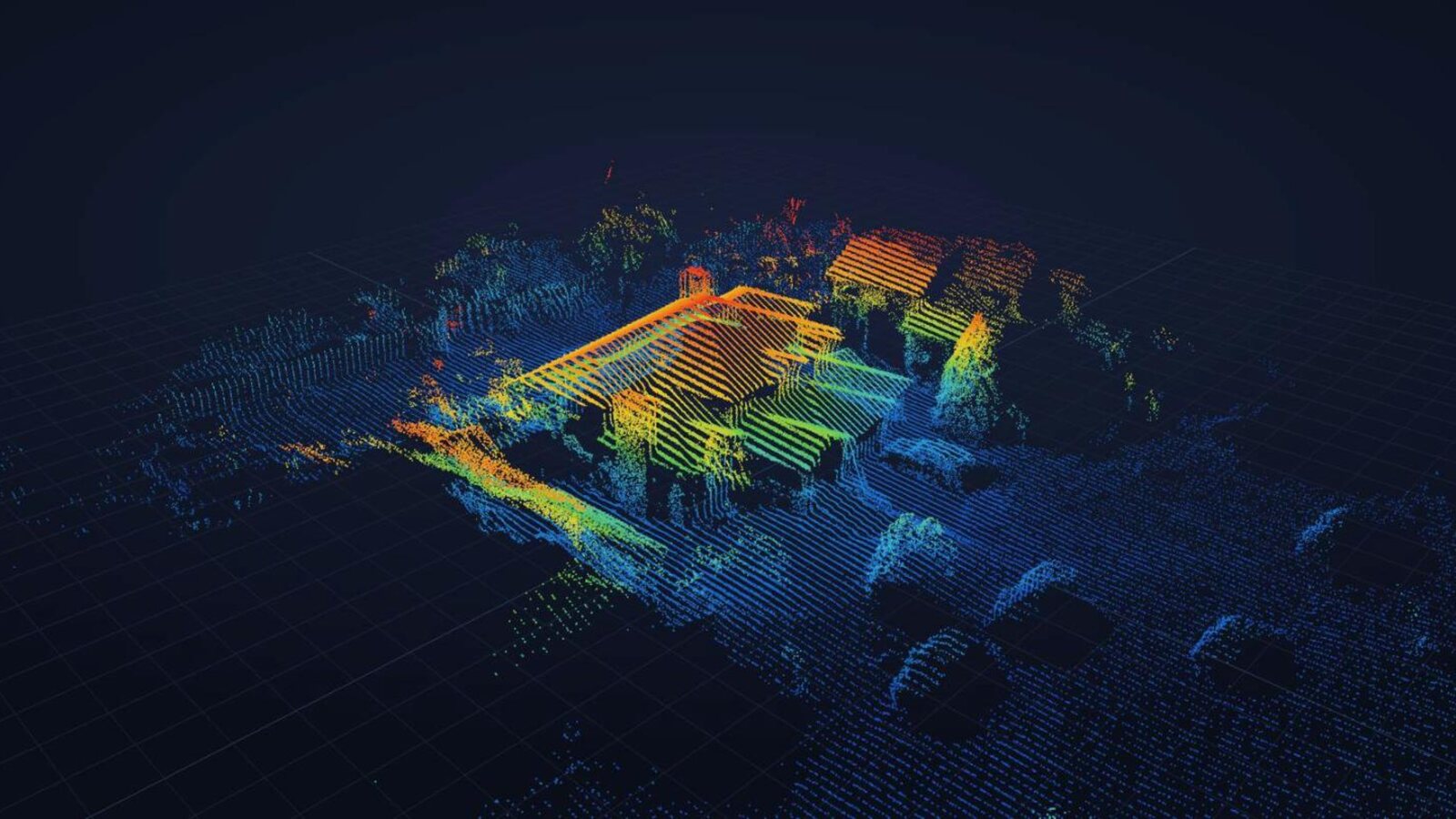
Kestrel is a measurement company, not a drone company. The drone is just how your team takes the photos. Almost any modern camera drone with GPS and a 3-axis gimbal will do. Our picks: the DJI Mini 5 Pro for most teams, the DJI Mini 4K on a tight budget, and the DJI Air 3S if you want the best. A certificated remote pilot must be responsible for each flight; another person can operate the controls under that pilot’s direct supervision.
What do the photos need?
Kestrel builds the measurement from about 20 photos: one to three looking straight down at the roof, then one slow circle around the house with the camera tilted about 45 degrees. For that to work, every photo needs a few things.
- GPS position and altitude in the photo. This is how Kestrel knows the real size of the roof. Kestrel checks every upload for it, and photos without it are turned away.
- The camera’s details in the photo. Every real drone writes these automatically.
- A 3-axis gimbal that points straight down and tilts to about 45 degrees. It keeps the camera steady, so the photos are sharp enough to line up.
- 12 megapixels or more. More is better, but 12 is plenty from a few stories up.
- Original JPEG files straight off the drone’s memory card. Screenshots, crops and app exports can lose the GPS data.
Nice to have: an automated flight mode that circles the house and takes photos for you. It makes every orbit consistent, even with a newer pilot.
Which drones do we recommend?
Prices are what we saw at B&H Photo on October 8, 2026. Drone prices move, so check before you buy.
| Drone | Price | Why |
|---|---|---|
| DJI Mini 5 Pro Best value | $759 | Large 50 MP camera, points straight down, and automated flights that circle the house and take the photos. Nearly top-of-the-line quality for under $800. |
| DJI Mini 4K Budget pick | $299 | 12 MP, 3-axis gimbal, points straight down, GPS in every photo. Its automatic circle mode records video, not photos, so the orbit is flown by hand. Fine for a careful pilot. |
| DJI Air 3S Premium pick | $1,099 | Two cameras (50 MP wide and 48 MP zoom), the steadiest flier of the three in wind, and automated flights. More drone than Kestrel needs, but a joy to fly. |
The two Minis weigh under the FAA’s 250-gram line. The Air 3S does not. That doesn’t change the rules for business flying (more on that below), but the lighter drones are easier to carry on every job.
Which drones should you skip?
- DJI Neo and Neo 2. Fun little drones, but their cameras aren’t on a 3-axis gimbal, so photos come out tilted or soft.
- Any drone without GPS, including most toy drones. No GPS in the photo, no measurement.
- A brand-new DJI Mini 4 Pro. It’s a great drone, but it’s being phased out, and the kits still in stores cost more than a Mini 5 Pro. A used one in good shape is fine.
- Drones we can’t confirm yet. Some budget brands let you turn GPS-in-photos off, or don’t say whether they record altitude. If you already own one, fly a test job and we’ll tell you if the photos work.
What license does your team need?
Measuring roofs for your business is commercial flying. That means:
- An FAA Part 107 remote pilot certificate for the remote pilot in command, whatever the drone weighs. Another person may operate the controls under that pilot’s direct supervision and ability to take control. The knowledge test is $175.
- FAA registration for each drone: $5, good for three years. Under Part 107 this applies to every drone, including the small ones.
- Remote ID. Each drone must broadcast it unless flown in an FAA-recognized identification area (FRIA). All three of our picks have it built in.
Doesn’t flying under 400 feet get you out of it?
No. Part 107 generally limits drones to 400 feet above ground level. Within a 400-foot radius of a structure, a drone may fly up to 400 feet above that structure’s immediate uppermost limit (14 CFR 107.51). This height rule does not exempt business flights from Part 107. The free recreational certificate (TRUST) only covers flying for fun.
It’s worth doing right: it keeps your team legal on every job site, and homeowners notice.
What about the news on DJI?
As of October 2026, the FCC no longer approves new foreign-made drone models, DJI included. Drones that were already approved, including all three of our picks, can still be sold and flown, and can keep getting software updates through at least January 2029. The FCC is also weighing a rule that could stop sales of some already-approved models, including the Mini 5 Pro and Air 3S, about six months after a final decision. There’s no final decision yet.
Our advice: if you want one of these, buy it soon. A drone you already own keeps flying either way. If your work requires a U.S.-made drone for a government contract, those exist, but they start around $7,000.
How should you set up the camera?
Before the first flight: photos set to JPEG (JPEG plus RAW is fine), GPS on, full resolution if the drone offers it (48 or 50 MP instead of 12), and upload the original files from the memory card. Then follow the capture steps in Bench: one to three photos straight down, then one slow circle at about 45 degrees.
Not sure about the drone you already have?
Fly one roof and upload it. Kestrel checks every set of photos when it arrives and tells you if anything’s missing, like GPS or too few photos. Questions? Book a quick call and we’ll walk you through it.